象棋 Xiangqi
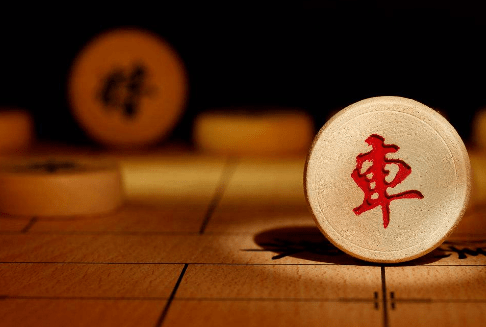
Xiangqi is a board game that simulates ancient military strategy and warfare. Its origins can be traced back to the Warring States period and the game of Liubo. Through evolution during the Qin and Han dynasties, a prototype known as Baoying Xiangqi emerged in the Tang dynasty, featuring pieces such as chariots, horses, generals, and soldiers. By the Song dynasty, the cannon was added, and the game took its final form with the modern set of 32 pieces.
象棋是模拟古代兵法战争的一种棋类游戏,最早可追溯至战国时期的“六博棋”,历经秦汉演变,在唐代确立了有车、马、将、卒的“宝应象棋”雏形,至宋代加入“炮”并定型为现代的32枚棋子。
象棋是一種模擬古代兵法與戰爭策略的棋類遊戲。其起源可追溯至戰國時期的「六博棋」。經歷秦漢時期的演變,至唐代形成了稱為「寶應象棋」的雛形,棋子包括車、馬、將、卒等。到了宋代,加入了「炮」這一棋子,並最終定型為現代使用的三十二枚棋子。
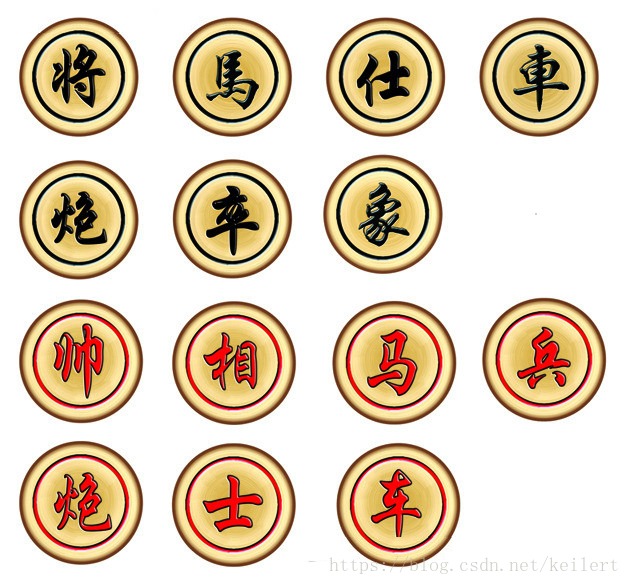
Xiangqi pieces are divided into two sides, red and black, with sixteen pieces on each side. Each side consists of seven types of pieces: the General (Shuai/ Jiang), Advisor (Shi), Elephant (Xiang), Chariot (Che), Horse (Ma), Cannon (Pao), and Soldier (Bing/ Zu)
象棋棋子分红黑两组,各十六枚,每组包括帅/将、仕/士、相/象、车/俥、马/傌、炮/砲、兵/卒。
象棋棋子分為紅、黑兩組,各有十六枚。每組包含七種棋子:帥/將、仕/士、相/象、車/俥、馬/傌、炮/砲、兵/卒。
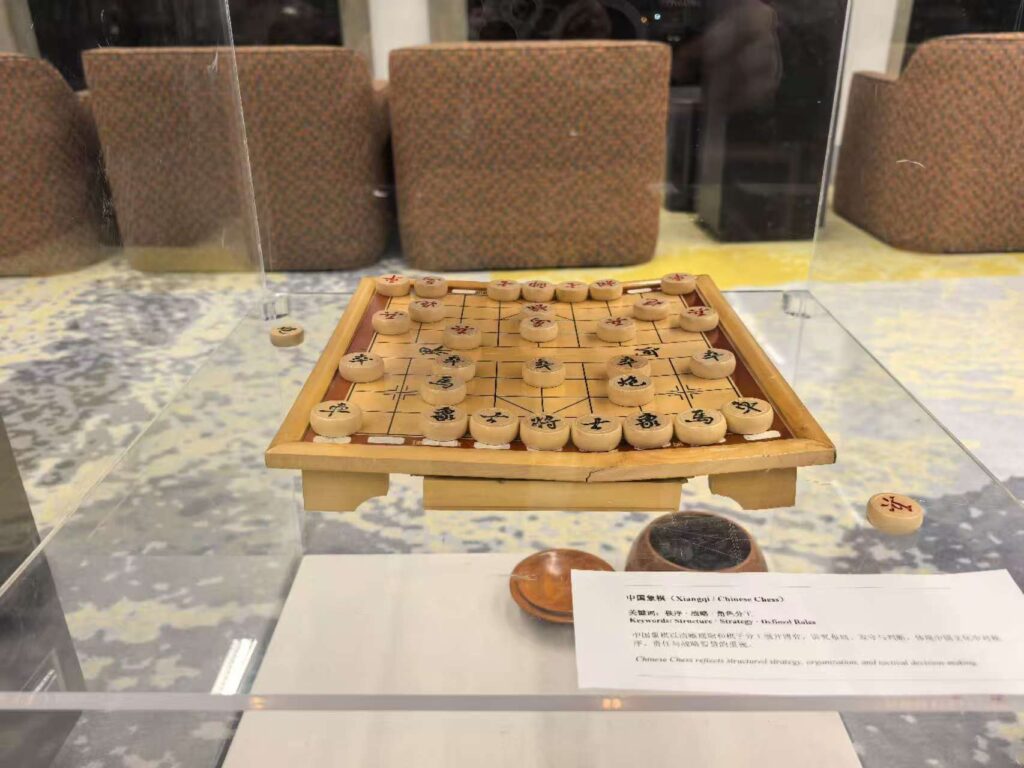
The Xiangqi board is a rectangular grid formed by the intersection of nine vertical lines and ten horizontal lines, creating a total of ninety intersection points. The pieces are placed on the intersection points rather than within the squares.
The core rules are summed up as: “the horse moves in an L-shape, the elephant moves diagonally two points, the chariot moves in straight lines, the cannon captures by leaping over a piece, and the general remains within the palace.” The ultimate objective is to defeat the opponent by checkmate or stalemate of the opposing general. The red side usually moves first, with players taking turns one move at a time. Strategy emphasizes coordinated offense and defense using soldiers advancing across the river together with chariots, horses, and cannons, highlighting careful planning and tactical foresight.
中国象棋棋盘是由9条纵线和10条横线相交而成的矩形平面,共有90个交叉点,棋子置于交叉点上。
规则核心是“马走日,象飞田,车走直线炮翻山,将帅不出九宫格”,通过“将死”或“困毙”对方将/帅为最终目标,通常红方先走,轮流一着,以兵/卒过河、车马炮配合攻守,讲究谋略。
中國象棋棋盤由九條縱線與十條橫線相交而成,呈長方形平面,共有九十個交叉點,棋子置於交叉點上,而非格內。
象棋的規則核心可概括為:「馬走日、象飛田、車走直線、炮翻山、將帥不出九宮格」。最終目標是以「將死」或「困斃」對方將/帥取勝。通常由紅方先行,雙方輪流一著,講究兵/卒過河,以及車、馬、炮的攻守配合,重在謀略與布局。
围棋 Weiqi ( Go)
Weiqi has a history of more than 4,000 years and is revered as “the ancestor of board games.” According to legend, it was created by the ancient sage-king Emperor Yao as a means to cultivate moral character and stimulate wisdom. An old saying records, “Yao created Weiqi, and Dan Zhu excelled at it.” The earliest surviving written references appear in Spring and Autumn period texts such as the Zuo Zhuan. During the Warring States period, Yi Qiu is recognized in historical records as the first professional Go player in Chinese history.
围棋已有四千多年的历史,被誉为“棋类之鼻祖”。相传围棋由上古圣君帝尧所创,用以陶冶情操、启迪智慧,古语有云:“尧造围棋,丹朱善之”。现存最早的文字记载见于春秋时期典籍《左传》,而战国时期的弈秋,被史籍公认为中国历史上第一位职业棋士。
圍棋已有四千多年的歷史,被譽為「棋類之鼻祖」。相傳圍棋由上古聖君帝堯所創,用以陶冶情操、啟迪智慧,古語云:「堯造圍棋,丹朱善之。」現存最早的文字記載見於春秋時期典籍《左傳》,戰國時期的弈秋,則被史籍公認為中國歷史上第一位職業棋士。
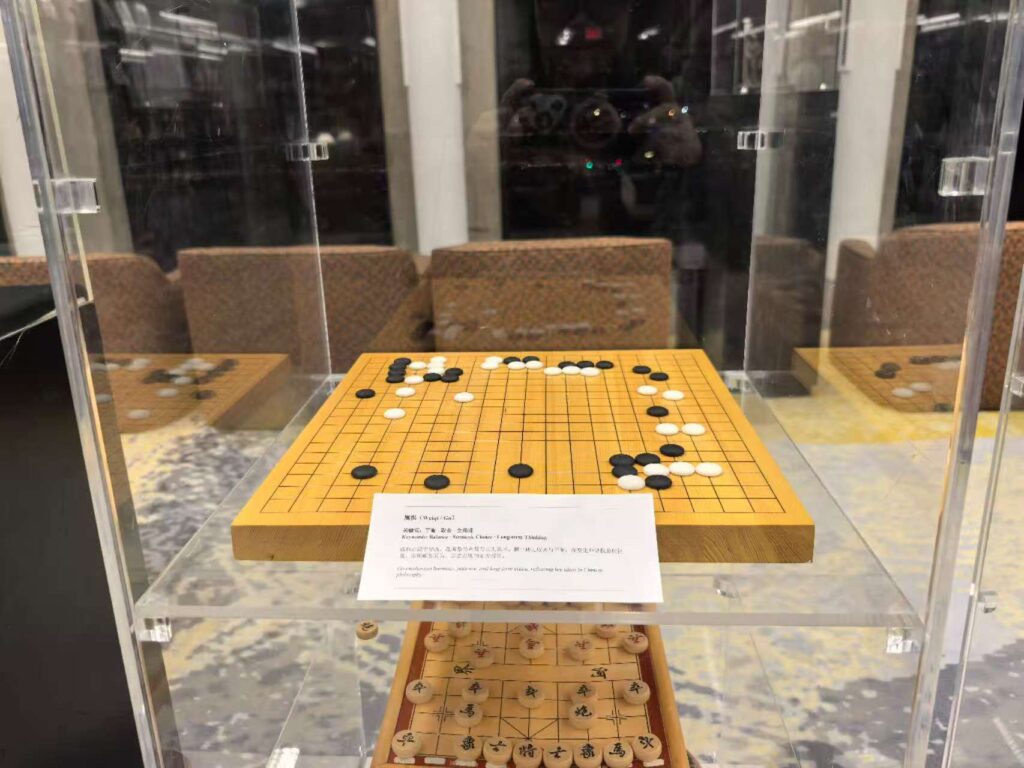
Internationally, the game of Weiqi is commonly referred to as “Go.” The rules of Weiqi differ from those used in international competition, with the primary distinction lying in the method of scoring. Chinese rules employ the area-scoring method: at the end of the game, each intersection occupied by one’s own stones, as well as each empty point within one’s territory, counts as one point. In contrast, international rules generally use territory scoring, counting only the empty points surrounded at the conclusion of the game.
国际上通常使用“Go”一词称呼围棋。中国围棋与国际围棋规则是不同的,区别主要在于胜负计算方法。中国围棋采用数子法,终局时棋盘上不论是空还是子,只要是自己的就计1分。国际围棋则只计数最终围住的空点。
在國際上,圍棋通常以「Go」一詞稱呼。中國圍棋與國際圍棋規則有所不同,主要差異在於勝負的計分方式。中國圍棋採用數子法(面積計分法),終局時棋盤上凡屬於己方的交叉點,不論為己方棋子或所圍空點,皆計一分。國際圍棋則多採用數地法,只計算最終所圍住的空點。
麻将 Mahjong
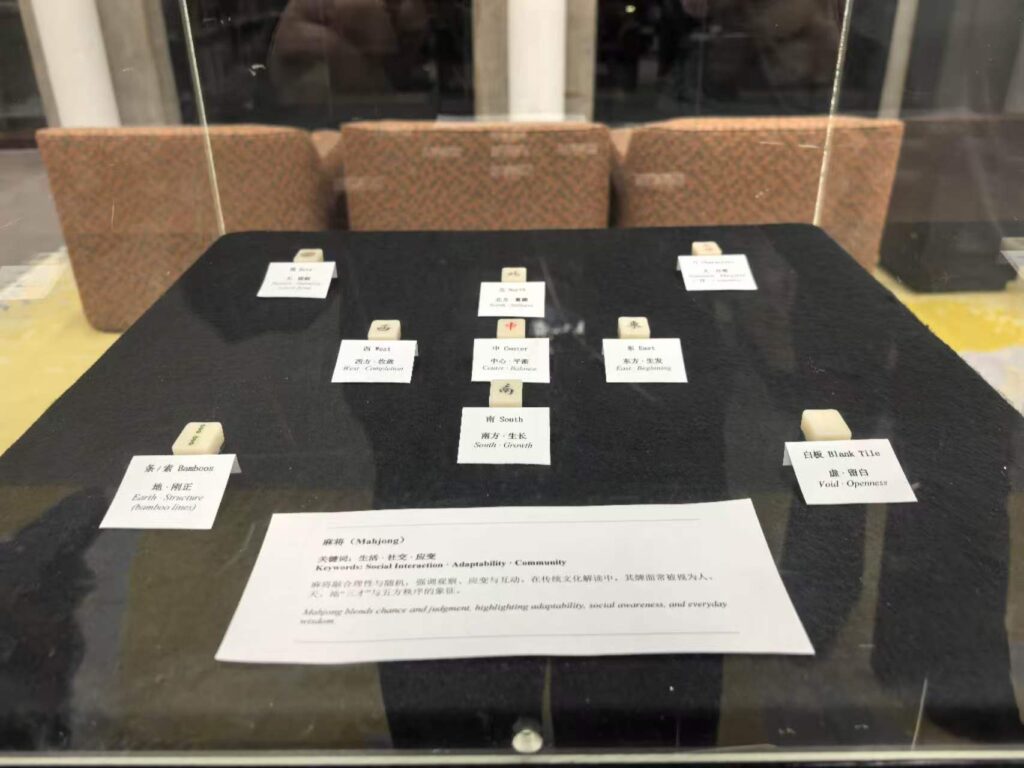
The term “Mahjong” is commonly believed to be a dialectal homophone of the word for “sparrow,” named after the clicking sounds made by the tiles during play, which resemble the chirping of birds. The prevailing view holds that Mahjong originated in the late Ming and early Qing dynasties, evolving from earlier card games such as Yezi Xi (Leaf Game) or Madiao played in regions including Suzhou and Ningbo.
“麻将”一词通常被认为是“麻雀”的方言谐音,因玩牌时瓷砖相碰发出的噼啪声像鸟儿叽喳声而得名。主流观点认为其源自明末清初,由苏州、宁波等地的护粮牌或马吊牌演变而来。
麻將」一詞通常被認為是「麻雀」的方言諧音,因遊戲過程中牌張相互碰撞所發出的聲響,如鳥雀啁啾,故而得名。主流觀點認為,麻將起源於明末清初,由蘇州、寧波等地流行的護糧牌或馬吊牌演變而來。
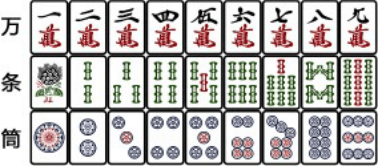
During the Qing dynasty, the authority responsible for managing the Taicang granaries produced more than one hundred bamboo tally cards to encourage the capture of sparrows and the protection of stored grain. These cards were used to record rewards for eliminating sparrows and safeguarding the granaries. They were divided into three categories: Dots (Tong), Bamboo (Tiao), and Characters (Wan).
Dots (Tong): Represent a top-down view of the conical straw covers used on grain storage.
Bamboo (Tiao): Symbolize sparrows strung together with thin cords.
Characters (Wan): Indicate units of monetary reward.
Over time, these grain-protection cards gradually evolved into the three suited tile sets—Dots, Bamboo, and Characters—used in modern Mahjong.
清朝时期,太仓负责管理粮仓的机构为鼓励捕雀护粮,制作了一百多张竹制护粮牌,用于记录捕杀麻雀、保护粮仓的奖励情况。这些牌子由“筒、条、万”三类组成。
筒:指粮仓锥形草盖的俯视图。
条:象征以细绳串起的雀鸟。
万:指赏钱的计算单位。
此后,这些护粮牌逐渐演变,最终形成今日麻将牌中的“筒、条、万”三大花色。
清朝時期,太倉負責管理糧倉的機構為鼓勵捕雀護糧,製作了一百多張竹製牌子,用於記錄捕殺麻雀、保護糧倉的獎勵情況。這些牌子由「筒、條、萬」三類組成。
筒-指糧倉錐形草蓋的俯視圖。
條-象徵以細繩串起的雀鳥。
萬-則指賞錢的計算單位。
此後,這些護糧牌逐漸演變,最終形成今日麻將牌中的「筒、條、萬」三大花色。
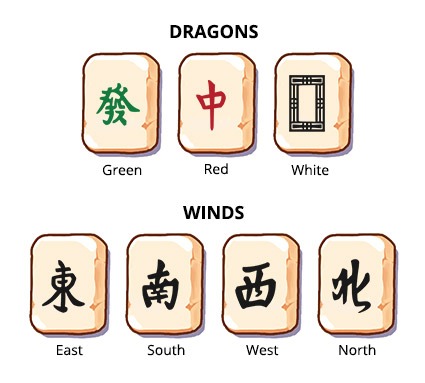
The design of Mahjong tiles richly reflects traditional Chinese culture. In addition to the three suited categories—Dots, Bamboo, and Characters—the “Red Dragon (Zhong), Green Dragon (Fa), and White Dragon (Bai)” tiles are often interpreted as symbolizing the Central Plains, prosperity, and the common people. The East, South, West, North, and Center tiles represent different directions and winds.
Although Mahjong tiles and rules vary slightly from region to region, the game remains a cherished pastime among Chinese communities, enjoyed as a form of leisure and social entertainment after meals and in everyday gatherings.
麻将牌的设计充分融合了中国传统文化,除了筒、条、万之外, “中、发、白”三种牌分别象征中原、发财、白丁; 东、西、南、北、中则象征不同风向。不同地区的麻将牌稍有区别,规则也有所不同,但都是华人茶余饭后用于消遣娱乐的游戏工具。
麻將牌的設計充分融合了中國傳統文化。除了「筒、條、萬」三大花色之外,「中、發、白」三種牌分別象徵中原、發財與白丁;東、西、南、北、中則象徵不同方位與風向。
各地麻將牌的形式略有差異,規則亦不盡相同,但皆為華人茶餘飯後消遣娛樂、聯絡情感的重要遊戲工具。
Volunteers: Rong Zhu, Sarah Hu, YY Lee, Jie Yao.